

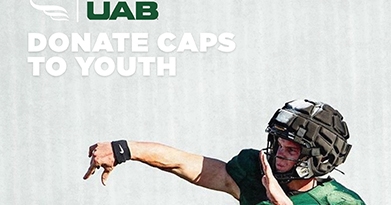

The sight of NFL linemen wearing bulky, padded shells over their helmets during practice has become common, sparking a nationwide debate: Do Guardian Caps actually work? The answer is nuanced, depending on where you look for the data and what level of football you're talking about. It is a common question I get asked about whether in the neighborhood or on the collegiate football sideline in Alabama.
The NFL's Compelling Data
At the professional level, the National Football League has championed the Guardian Cap, and their data is the strongest argument for its efficacy. The league mandated the cap for specific, high-contact positions (like linemen, tight ends, and linebackers) during preseason practices.
Following this mandate, the NFL reported a significant reduction in concussions for the mandated position groups-in some periods, a reduction of over 50% compared to previous three-year averages. This success led the league to expand the mandate and even permit the caps as an option during regular season games. The rationale is clear: by absorbing and dissipating the energy from thousands of repetitive, sub-concussive hits, the caps reduce the cumulative head trauma players face in practice.
The Science of Impact Mitigation
Independent testing in controlled laboratory environments supports the physical mechanics behind the cap. Organizations like the Virginia Tech Helmet Lab have shown that the soft outer shell of the Guardian Cap (especially the newer, NFL-grade NXT model) can reduce impact severity and lower concussion risk metrics when paired with a high-rated helmet. The technology is designed to:
Absorb Force: The soft shell compresses on impact, increasing the time of collision and decreasing the peak acceleration (g-force) transmitted to the head.
Redirect Energy: The slightly loose, slick material can shift on the hard helmet, helping to redirect some of the dangerous rotational or angular forces away from the head.
Recently, UAB Sports and Exercise Medicine donated Guardian Caps to youth football athletes in Birmingham.
The Skepticism and Real-World Questions
Despite the positive NFL results, skepticism remains, largely driven by on-field studies at lower levels of the sport.
Recent peer-reviewed research analyzing the impact of Guardian Caps on high school football players found no statistically significant reduction in the rate of sport-related concussions during practice or games. This discrepancy may be due to differences in cap models (high schools often use a thinner XT version), variations in player size and speed, and the overall quality of the underlying helmets.
Furthermore, some research on college players, using sensors to measure head kinematics, has also suggested a negligible effect in reducing the magnitude of head impacts.
A key concern raised by critics is the potential for "moral hazard"-the idea that players, feeling protected by the extra padding, may play more aggressively and lead with their heads more often, effectively canceling out the benefit of the equipment.
The Final Verdict
The consensus lands in a cautious middle ground.
Yes, Guardian Caps work as an impact mitigation tool. The science clearly shows they absorb and dissipate collision forces. For the NFL, this has translated into a measurable reduction in practice-related concussions, which is a major victory for player health.
However, no, they are not a silver bullet that eliminates concussions. They are a secondary protective measure that is only one part of a comprehensive safety strategy, which must also include proper helmet fit, technique training, and rule changes that reduce contact. The data suggests their effectiveness may also vary significantly depending on the cap model, the quality of the helmet underneath, and the age/level of the athletes.
This post is for educational purposes only. Please consult with your board certified physician for any care related to orthopedic injuries.


