

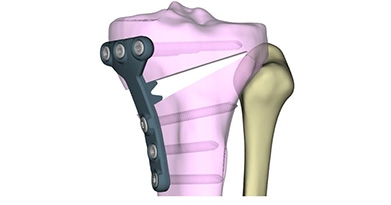
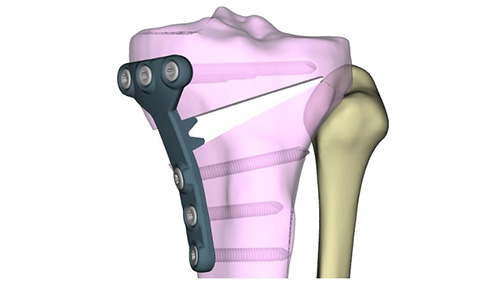
If you have pain on the inside of your knee and have been told you have bow-legged alignment, also known as varus alignment, a high tibial osteotomy (HTO) may be an option to help relieve pain and preserve your natural knee.
When the leg is bow-legged, more of your body weight is transferred to the inner (medial) side of the knee. Over time, this extra pressure can wear down the cartilage and meniscus, leading to pain, swelling, and early arthritis. Simply treating the damaged cartilage or meniscus without correcting the alignment often leads to poor outcomes and continued stress on the knee.
A high tibial osteotomy helps address the root cause of the problem. During this procedure, the upper part of the shin bone (tibia) is carefully cut to change the alignment of the leg. This shifts weight away from the worn or damaged area of the knee and distributes it more evenly across the joint. The result is less pain, improved function, and better protection of the remaining healthy cartilage.
HTO is most commonly recommended for younger, active patients who have arthritis or cartilage damage that is primarily limited to the inside of the knee. It is also an excellent option for patients who want to remain active and are not yet ready for a partial or total knee replacement. A medial unloader brace can sometimes give you a preview of what an HTO may do for your knee.
A study was conducted to see which patients would do better with an HTO. Those less than 55 years old and body mass index less than 30 had better survivorship with an HTO. In favorable candidates, the HTO survives 100% at 5 years and 62% at 20 years.
In many cases, a high tibial osteotomy is combined with other joint-preserving procedures. Cartilage restoration, meniscus repair, and ligament reconstruction may all benefit from correcting the underlying alignment. Restoring proper mechanics helps protect these procedures and may improve their long-term success. Figures 1 and 2 show a high tibial osteotomy combined with osteochondral restoration in a triathlete patient.
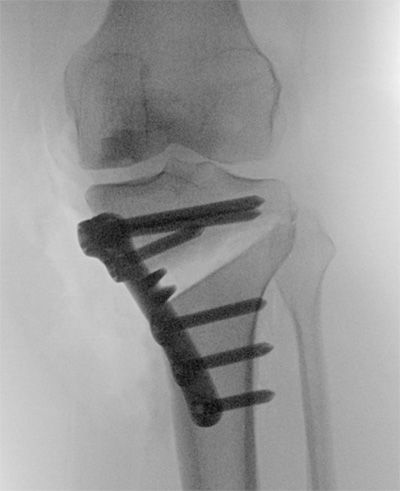
Figure 1
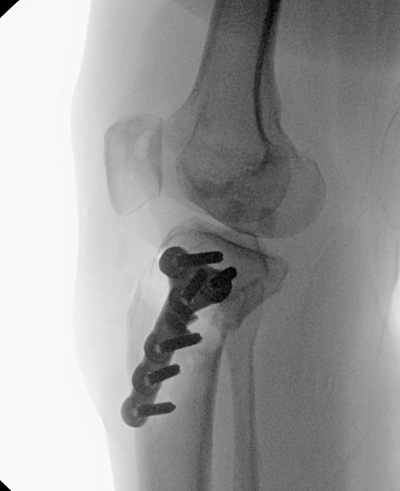
Figure 2
Recovery after an HTO requires patience and dedication. Most patients use crutches for several weeks while the bone heals and participate in a structured physical therapy program to regain motion, strength, and normal walking mechanics. Although recovery takes several months, many patients return to hiking, cycling, golf, skiing, and other recreational activities after healing is complete. It is important to discuss blood clot prevention after an HTO procedure with your surgeon. Our team typically recommends aspirin for prophylaxis during the protected weight bearing period.
One of the greatest benefits of a high tibial osteotomy is that it preserves your own knee. Instead of replacing the joint, the surgery redistributes the forces across the knee to reduce pain and slow the progression of arthritis. For many patients, this can delay the need for knee replacement for years while allowing them to maintain an active lifestyle.
Every patient is unique, and careful evaluation is essential. Standing alignment X-rays, advanced imaging, and a thorough physical examination help determine whether a high tibial osteotomy is the right treatment for your specific condition. An HTO also can have complications, including but not limited to failure of hardware, infection, prominent hardware, continued pain, or progression of arthritis.
If you’re experiencing persistent pain on the inside of your knee, have bow-legged alignment, or have been diagnosed with early arthritis, a high tibial osteotomy may be an excellent joint-preserving solution. By correcting the alignment instead of simply treating the symptoms, HTO can help reduce pain, improve function, and keep you active for years to come.
Amit Momaya, MD is a board certified orthopedic surgeon who specializes in sports medicine. He serves as the Chief of Sports Medicine at UAB, resides on the editorial board of research journals, and takes care of several collegiate and professional teams in Alabama. He performs the highest volume of knee osteotomies in the state of Alabama with patient specific instrumentation. This blog post is for educational purposes only. Please consult with your physician for a discussion on knee preservation.


