

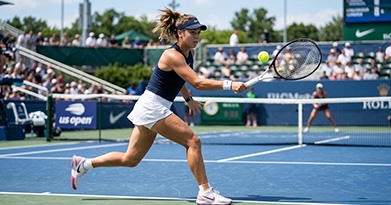
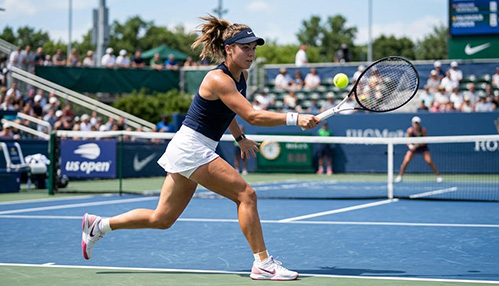
You're sprinting for a low volley or pushing off for a serve when suddenly-pop. It feels like someone literally kicked you in the back of the leg, or like a rubber band snapped inside your calf. You turn around, but no one is there. What you’ve likely just experienced is "tennis leg."
Tennis leg is a common sports injury involving an acute tear of the medial gastrocnemius—the large muscle on the inner side of your calf. It frequently strikes tennis players, runners, and weekend warriors during sudden, explosive movements. It was initially thought that the plantaris tendon had ruptured, but recent studies with ultrasound and MRI show that the injury is actually due to the gastrocnemius or soleus muscles.
While the initial pain can be alarming, the good news is that most cases heal completely without surgery. To confirm the diagnosis, your physician will perform a detailed history and physical exam. An ultrasound or MRI can help characterize the grade of injury. It is important to differentiate a gastroc strain from a ruptured achilles tendon, which entails a different treatment plan.
Here is your step-by-step roadmap to fixing tennis leg and safely reclaiming your spot on the court.
Phase 1: The First 72 Hours (Protect and Calm)
The moment the injury happens, your match is over. Trying to "play through it" transforms a minor tear into a severe, multi-month ordeal. Your immediate goal is to control swelling and protect the fragile, freshly torn muscle fibers.
Commit to the RICE protocol immediately:
- Rest: Stay off the leg. If you cannot walk without a limp, consider crutches and a walking boot.
- Ice: Apply a cloth-wrapped ice pack to your calf for 15 to 20 minutes every few hours.
- Compression: Wrap your calf in an elastic bandage or wear a compression sleeve to help with swelling.
- Elevation: Whenever you are resting, prop your leg up on pillows so it rests above the level of your heart.
Phase 2: Days 4 to 14 (Gentle Mobilization)
As the intense, throbbing pain begins to ease, your body starts laying down temporary scar tissue to bridge the gap in the muscle. Your job now is to encourage that tissue to align correctly without pulling it apart.
- Try a Heel Lift: Slip a small heel wedge into both of your shoes. Raising your heel slightly shortens the calf muscle, taking the daily tension off the tear while you walk.
- Gentle Movement: Begin light ankle circles and point your toes up and down. Movement pumps away lingering swelling and prevents stiffness.
- No Aggressive Stretching: It is incredibly tempting to pull your toes back to stretch a tight calf. Avoid this. Aggressive early stretching can re-tear the healing tissue.
Phase 3: Weeks 3 to 6 (Rebuild the Strength)
Once you can walk comfortably on flat ground, it is time to rebuild. A physical therapist is invaluable here, but your rehabilitation will generally focus on progressive loading.
- Isometrics: Start by gently pressing your feet into a wall or floor without moving the ankle, holding for 10 seconds.
- Heel Raises: Progress from seated heel raises to standing on both legs, and eventually to single-leg heel raises on flat ground.
- The Eccentric Focus: Once standard raises are easy, focus on the lowering phase. Raise up on two feet, shift your weight to the injured leg, and take a slow 4 seconds to lower your heel back to the ground.
Phase 4: The Safe Return
Do not step back onto the court until you can comfortably perform 20 to 30 single-leg heel raises on your injured side without any pain.
Before playing a real match, spend a week or two doing light jogging, hopping, and lateral side-shuffling drills. When you finally play, start with static hitting sessions before jumping back into competitive matches.
Recovering from tennis leg is a marathon, usually taking anywhere from 4 to 12 weeks. Be patient with your body, respect the healing process, and you will get your game back.
Amit Momaya, MD is a board certified orthopedic surgeon who specializes in sports medicine. He serves as the Chief of Sports Medicine at UAB and resides on the editorial board of research journals. He has taken care of multiple high school and collegiate tennis athletes. This blog post is for educational purposes only. Please consult with your physician for a discussion on the management of calf injuries.


