

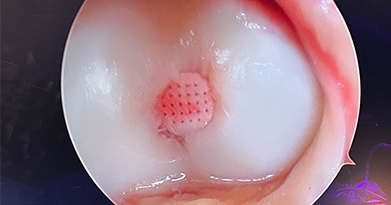
Cartilage degeneration of the knee can cause pain, especially for older adults. Cartilage tends to break down as we age. Symptoms of cartilage degeneration include pain, catching and clicking, swelling, or reduced mobility of the joint.
Traditionally, there did not exist many effective options for those with cartilage issues in older patients. Traditional microfracture outcomes are often poor after 2 years. In addition, if the knee already has moderate arthritis, most surgeons tend to avoid cartilage preservation, leaving the patient with total knee replacement as the only surgical option. However, recently, an implant has come to market that may help those suffering from cartilage lesions. The implant, called CartiHeal Agili-C, is derived from sea coral (aragonite). The implant is approximately 7.5 mm in diameter and implanted into the knee. It can help regrow cartilage and bone. It acts as a scaffold, recruiting nearby cells to help fill in potholes in the knee.
Recent clinical data on the CartiHeal Agili-C implant-demonstrate significant long-term benefits compared to traditional surgical treatments like microfracture or debridement.
The most recent five-year results, published in June 2026, reinforce the implant's effectiveness in treating knee defects even in patients with mild-to-moderate osteoarthritis.
Key Study Findings
Studies typically compare the Agili-C implant against the Surgical Standard of Care (SSOC), which includes microfracture and debridement.
- Superior Pain Relief: 5-year data indicates that patients with the CartiHeal implant reported twice the reduction in pain scores compared to those who underwent the standard surgical care.
- Reduced Risk of Joint Replacement: Results from 2025 showed that at the 4-year mark, patients treated with Agili-C had an 87% lower relative risk of needing a total knee replacement or osteotomy compared to the control group.
- Improved Quality of Life: Patients reported significantly higher Knee injury and Osteoarthritis Outcome Scores (KOOS) across all subscales, including sports, recreation, and activities of daily living.
- High Responder Rate: In the pivotal 2-year study, 77.8% of Agili-C patients were classified as "responders" (meaning they had an improvement of at least 30 points in their KOOS score), compared to only 33.6% in the standard care group.
Figure 1 shows a cartilage defect in the knee (trochlea) that was addressed with the Cartiheal Agili-C implant. Figure 2 shows the defect filled with the implant. The surgery is performed on an outpatient basis. Patients can expect to use crutches or a rolling walker for a few weeks after surgery to offload the joint and allow for early healing. Patients will then gradually progress their weight bearing and rebuild strength with the help of physical therapy.
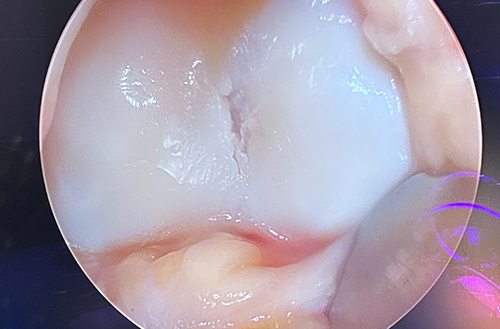
Figure 1
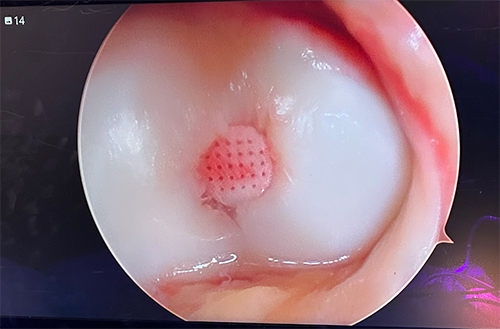
Figure 2
Dr. Momaya has extensive training in cartilage preservation of the knee. He is one of the few surgeons in the southeastern United States using CartiHeal Agili-C to help with joint preservation and help provide patients with more years before a knee replacement.
Amit Momaya, MD is a board certified orthopedic surgeon who specializes in sports medicine. He serves as the Chief of Sports Medicine at UAB, resides on the editorial board of research journals, and takes care of several collegiate and professional teams in Alabama. This blog post is for educational purposes only. Please consult with your physician for a discussion on cartilage preservation in the knee.


