

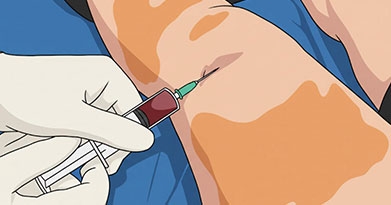
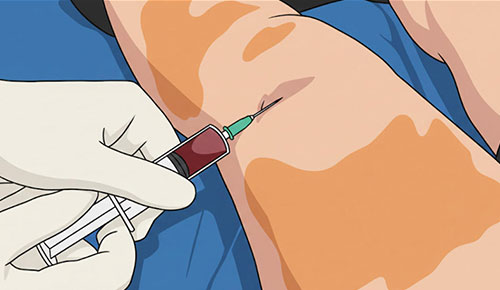
Knee aspiration, or arthrocentesis, is a common procedure performed to evaluate or relieve knee joint effusions. It involves using a needle to draw fluid out from the intra-articular space of the knee. A knee aspiration can offer rapid symptom relief, improve range of motion, and provide diagnostic clues that guide further management.
An aspiration that reveals a hemarthrosis may indicate intra-articular pathology, such as an ACL tear, meniscus injury, or fracture, and may warrant further workup such as an MRI. In addition, a hemarthrosis can cause damage to the cartilage within the knee, which is important to consider in the young patient with an acute knee injury. There is evidence that the inflammatory cytokines involved can result in chondrocyte apoptosis (or death) and suppress cartilage repair. Aspiration of an acute knee injury to remove the hemarthrosis decreases the amount of inflammatory cytokines in the joint, thus potentially decreasing cartilage damage. In addition, aspiration allows for improved range of motion, helping with the rehabilitation process. Furthermore, a chronic effusion in the knee can shut down the quadriceps muscles and lead to atrophy. Thus, an aspiration may help with limiting atrophy.
Procedure:
In our clinic, it is standard practice to do this under ultrasound guidance. Ultrasound has been shown to improve accuracy when inserting a needle into the knee.
Preparation
- Position the knee near full extension or slightly flexed
- Identify the effusion using ultrasound
- Use the superolateral approach
Anesthesia
- Apply ethyl chloride spray for superficial anesthesia
- Cleanse the area thoroughly with alcohol or chlorhexidine
- Infiltrate a few CCs of 1% lidocaine in the subcutaneous area and down to the capsule:
- First, create a small wheal under the skin.
- Then inject along the intended needle tract
Aspiration
- Using ultrasound guidance, insert an 18-gauge needle into the effusion
- Aspirate as much fluid as possible, noting color and viscosity:
- Bright red blood → acute hemarthrosis (intra-articular injury)
- Straw-colored fluid → less acute or inflammatory process
- Cloudy or purulent → possible infection (requires lab analysis)
Post-Procedure
- Apply gentle pressure and cover with a dressing.
If you have knee swelling and think you may need an aspiration, please see a board certified orthopedic surgeon to further evaluate the knee.
This blog post is for education only. Please seek care from you doctor prior to making any medical decisions.


