

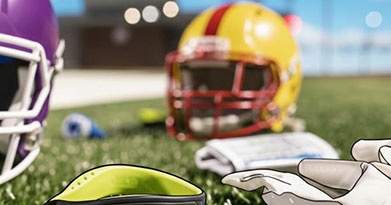
Football is a game of high-impact plays and collisions. There has been increasing concern regarding Traumatic Brain Injury (TBI) recently. While helmets have evolved to protect the brain, they haven’t quite solved the problem of the brain moving inside the skull—the "slosh" factor.
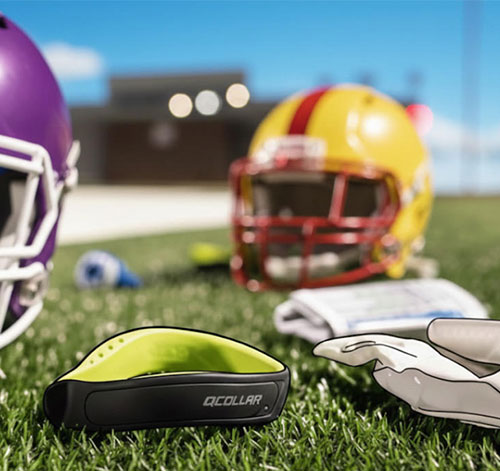
Enter the Q-Collar, a non-invasive device that looks more like a piece of high-tech jewelry than a piece of athletic gear. It’s becoming a common sight on NFL stars and college athletes alike, but what exactly does it do?
The Science of "Slosh"
To understand the Q-Collar, you have to understand why traditional helmets aren't enough. When a player takes a hit, the brain-which sits in cerebrospinal fluid-sloshes back and forth inside the skull. This movement can stretch and damage axons, leading to concussions or CTE (Chronic Traumatic Encephalopathy) over a long period time.
The Q-Collar takes a physiological approach rather than a mechanical one. It applies light pressure to the jugular veins in the neck. This pressure slightly increases the blood volume in the brain’s venous space. Essentially, it creates a "tighter fit"-filling the extra space around the brain with the body’s own fluid to limit movement during an impact.
A study published in BMJ suggested that collar wearing may provide a protective effect against brain microstructural changes after repetitive head impacts.
Why Football Players are Buying In
You may have noticed the horseshoe-shaped device around the necks of players like Dalton Schultz or Tony Pollard. For athletes, the appeal is simple: extra protection that doesn't hinder performance.
- Non-Invasive: It doesn't require surgery or medication.
- Lightweight: It weighs only a few ounces and doesn't restrict neck movement or breathing.
- FDA Cleared: In 2021, the FDA cleared the Q-Collar for athletes aged 13 and older, citing studies that showed players wearing the collar had fewer changes in their brain’s white matter over a season compared to those who didn't.
Is it a Total Solution?
It’s important to note that the Q-Collar is not a "concussion-proof" device. No piece of equipment can guarantee total safety in football. Experts emphasize that the collar should be viewed as an added layer of defense-a supplement to high-quality helmets, proper tackling techniques, and smart coaching.
Critics also point out that while the data on white matter protection is promising, more long-term independent peer-reviewed studies are needed to see if it truly reduces the incidence of clinical concussions over a lifetime.
The Future of the Gridiron
As we move into 2026, the culture of football is shifting toward "safety-first" technology. From the Guardian Caps worn in practice to the Q-Collar worn during games, the goal is clear: keep the game we love alive by protecting the people who play it.
When parents ask me about the Q-Collar, I let them know that the evidence is promising but still in its infancy.
This blog post is for educational purposes only. Please consult with a board certified physician when discussing any neurologic pathology or preventative steps in avoiding neurologic injury.


